

Some people teach us what trust can cost. Others teach us why we should never stop trusting. What happens when the systems, people and assumptions we rely on no longer hold?
When Doing the Right Thing Is Not an Option
During an eight-week stay in Kolkata in 2023, I encountered a problem that seemed almost embarrassingly simple: I did not know what to do with my rubbish.
There were waste disposal facilities, including some not particularly far away. But there were no bins available to me and no household waste collection I could use. Across the road, a pile of rubbish had become the practical solution: people left their waste there, and every few days, it was burned.
At first, I resisted doing the same. Adding my own rubbish to a pile in the street felt wrong, so I held on to it for as long as I reasonably could. But storing waste indefinitely was not an environmental strategy either. Eventually, I had to accept something uncomfortable: knowing that the situation was problematic did not give me a realistic alternative. I could disapprove of what I saw, know that waste should be handled differently and be personally committed to environmental issues. None of that created the infrastructure that was missing.
The experience stayed with me because it challenged one of the easiest assumptions to make when entering a different environment: that people behave differently because they care less. Sometimes they do. But sometimes the alternative we expect them to choose simply does not exist.
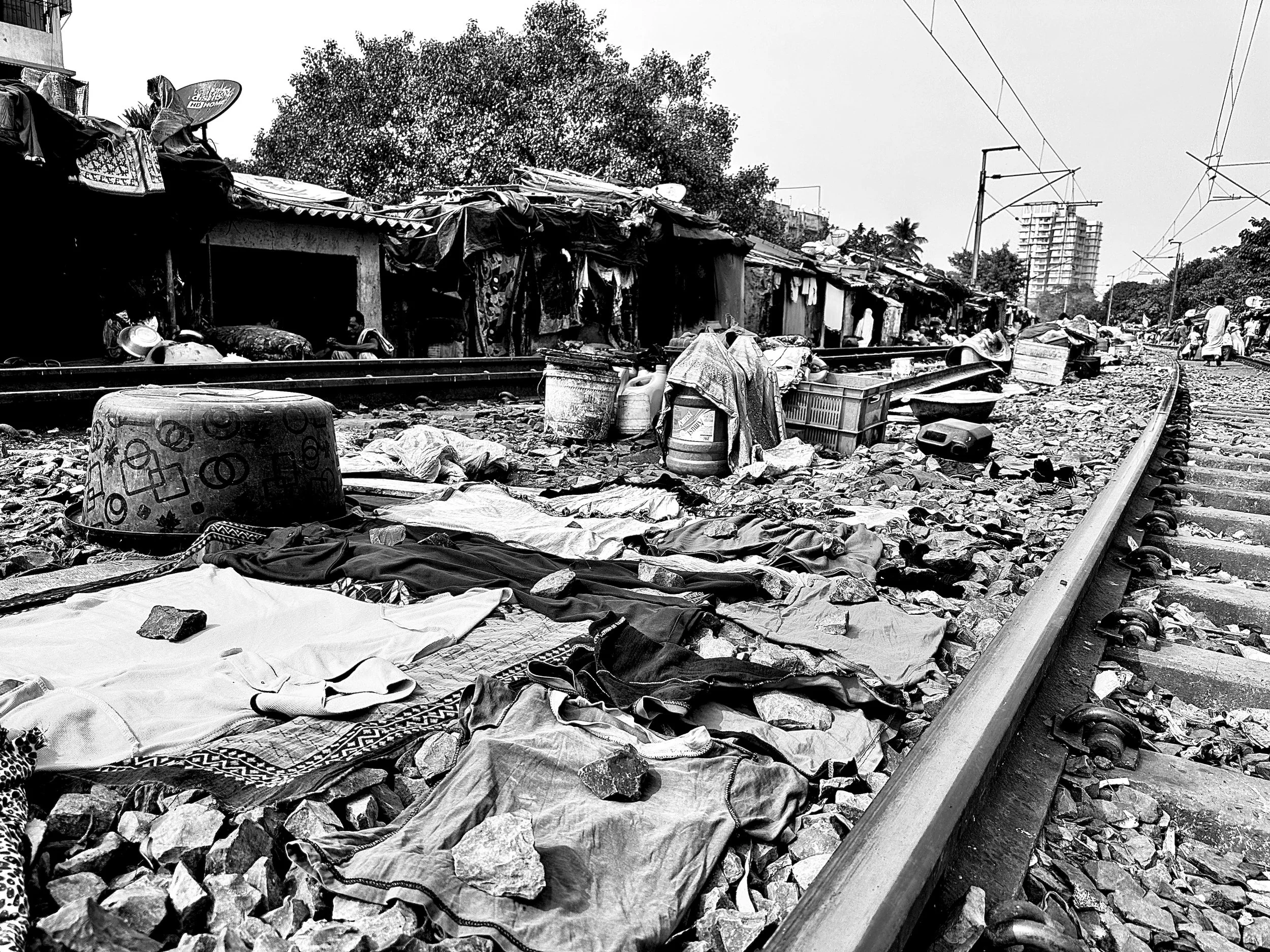
A railway track running through a waste picker community in Kolkata, with homes, everyday belongings and materials arranged alongside the tracks.
Awareness Needs Somewhere to Go
Environmental awareness matters, as do education and individual responsibility. But awareness without accessible alternatives has limits.
This became increasingly relevant to our work in India. Through projects involving bees, biodiversity, education and local livelihoods, I saw how closely ecological and economic realities can be connected. Asking people to protect an ecosystem means little if doing so threatens the income they depend on. Teaching environmental responsibility is important, but lasting change becomes far more likely when the responsible choice is also a realistic one.
Bees provide a particularly beautiful example of this interdependence. Their value cannot be reduced to honey. They support ecosystems, agriculture and biodiversity while also creating opportunities for education and income.
What began as a simple question of where to dispose of my rubbish became a lesson about something much larger. If we want people to act differently, awareness is only one part of the equation. The structures around them matter too.
Years later, I began to understand that the same was true of trust.
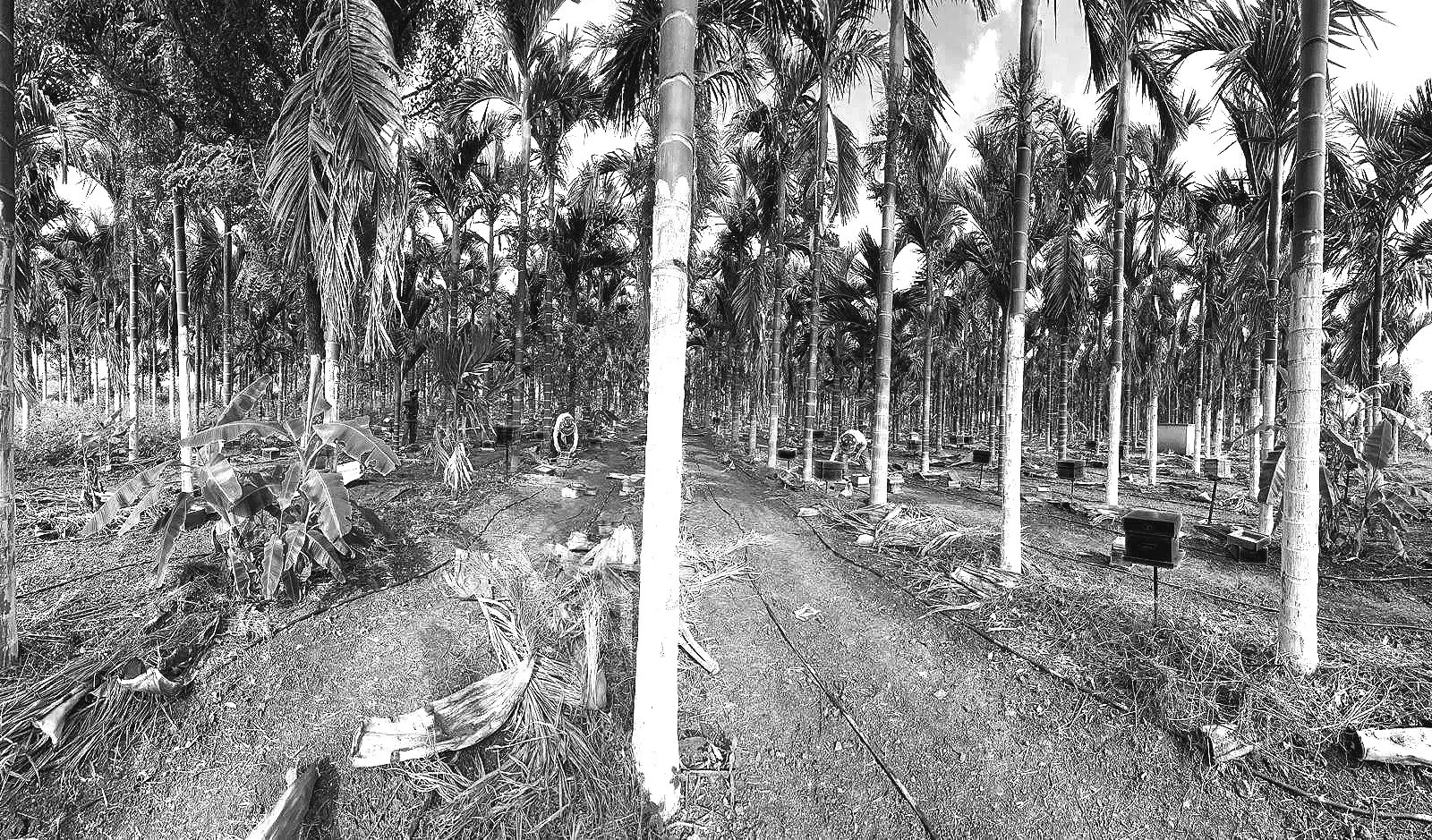
Beehives integrated into a plantation ecosystem — connecting biodiversity, agriculture and local livelihoods.
What Is Trust Worth Before It Is Tested?
Some people enter our lives briefly and prove remarkably reliable. Others remain for years before we discover that history and reliability are not necessarily the same thing.
I learned this in very different ways.
When my adoptive mother was dying, some people around me became particularly close. I was not only her son; during the final phase of her life, and for some time afterwards, I was also one of the last connections through which others could remain close to her.
Yet trust was already a much older part of her story.
What We Only Understand in Time
I had known for decades that my mother’s life had been shaped by experiences no child should have had to carry. There was violence, exploitation and profound betrayal within relationships that should have provided safety. She had shared much of this with me, and I understood that these experiences had left deep marks on her life, her relationships and the ways in which she searched for safety and reassurance.
What changed during the final months of her life was not that I suddenly discovered she had been wounded. I began to understand some parts of that story in far greater depth.
She spoke more openly about certain experiences and the connections between them. Details became clearer. Things I had known for years acquired a different weight when I understood more precisely what had happened, how different experiences were connected and how long some of their consequences had travelled through her life.
At the same time, another part of our own story was becoming more difficult for me. One of the greatest disappointments of my life was also connected to my mother. Its details belong elsewhere, but its dimensions became clearer during that same final chapter, with further pieces emerging after she died. Understanding more about what had happened to her gave me context. It did not erase what had happened between us.
By the time I understood enough to know which questions I needed to ask, however, the opportunity for the conversation I needed was disappearing. Pancreatic cancer, physical decline and increasingly powerful medication gradually changed what was possible between us. She was still there, but towards the end she was no longer consistently reachable in the way a conversation of that depth would have required.
Some things therefore remained unresolved. Not because there had never been an opportunity to speak, or because we had never been close enough to discuss difficult things, but because understanding sometimes develops at a different speed than life allows.
I can recognise how profoundly someone’s own experiences may have shaped what they later did without pretending that this removes the consequences for others. Understanding is not the same as excusing. Love does not require idealisation, and disappointment does not erase everything that came before it.
Perhaps one of the hardest lessons about trust is precisely that these things can exist at the same time. A person can have been deeply hurt and still hurt someone else. Someone can love us and profoundly disappoint us. We can understand more and still not arrive at forgiveness, certainty or a clean conclusion.
Sometimes understanding simply leaves us with a more truthful version of the complexity.

A wooden walkway stretching through a tree-lined park near my home, surrounded by mature trees and open green spaces.
When a Crisis Creates Closeness
The final phase of my mother’s life also changed other relationships around me.
One relative whom I had met perhaps five times in my life suddenly became intensely present. We looked at a final resting place together. I was asked to help organise deeply personal matters that, I was told, should not be left to his own daughter. Future plans were discussed, including things we might do together after my mother was gone.
For a time, it felt as though a relationship that had barely existed before was becoming something real.
Then, after the crisis had passed, much of that closeness disappeared again. Plans that had sounded concrete went nowhere. The intensity had been real in the moment, but it had not created the permanence I had assumed might follow from it.
I began to understand that a crisis can bring people extraordinarily close without necessarily creating a relationship capable of surviving ordinary life.
Life After the Moment Beside the Bed
Another person stood beside me at my mother’s deathbed.
There are moments that create a sense of permanence. You assume that someone who shared such a moment will somehow remain part of the story. But life after the funeral is longer than the moment beside the bed. The intensity fades, ordinary life returns and relationships can slowly reveal a different shape.
Years later, a disagreement involving something as comparatively insignificant as an annual contribution of around fifty euros escalated far beyond anything I could have imagined. What could have ended with a conversation, a resignation or a simple disagreement became something much larger, involving fundamentally different accounts of what had happened and eventually formal legal steps.
The fifty euros were never the real issue.
What was difficult was reconciling the person in the later conflict with the person who had once stood beside me during one of the most difficult moments of my life. For a long time, I wanted those two versions of the same person to fit neatly together.
Perhaps they simply do not have to.
Perhaps both can be true.
Fifteen Years Is a Long Time. Until It Isn’t.
Another lesson came from a friendship that lasted around fifteen years.
For most of that time, there had been little reason to ask what our promises were actually worth when keeping them became difficult. Friendship can continue for a very long time without ever facing that particular test.
Looking back, there had been smaller signs. An invoice from years earlier had only been partly paid. Other things had remained unresolved. None of them seemed significant enough to reconsider a long friendship.
Later, friendship and work became more closely connected. Projects emerged from something deeply personal to me: years of work, relationships, unpaid effort and a commitment to creating opportunities for others. Responsibilities were accepted, commitments were made and economic opportunities developed.
Then money entered the relationship in a different way.
An interest-free loan remained unpaid for years. Communication became increasingly difficult. Messages went unanswered. What had once appeared to be a clear commitment became something to be discussed, delayed and argued about when fulfilling it became inconvenient.
At some point, the question was no longer about money. It was about the previous fifteen years.
Had people changed? Had circumstances revealed something that had always been there? Or had familiarity simply felt so much like knowledge that I had stopped distinguishing between the two?
I still do not know.
Perhaps that is one of the more difficult consequences of broken trust. A serious disappointment does not only affect the present. It can make us revisit the past and ask whether we understood it correctly in the first place.
The bees, meanwhile, continued doing their part. Watching the humans involved, I learned that collective responsibility is less evenly distributed.
The People Who Did the Opposite
It would be easy to tell these stories and conclude that the lesson is to trust less. That would be the wrong lesson.
Alongside every experience that made me question trust, there were others that restored it. People I expected to remain disappeared, while others from whom I had expected very little showed remarkable loyalty. Some relationships survived distance and long periods of silence without turning connection into a demand. Some people helped without first asking what they would receive in return. Others accepted responsibility precisely when doing so became inconvenient.
This happened across countries, cultures and very different parts of my life. Broken trust is not German or Indian, and neither is integrity.
Some people taught me what trust can cost. Others taught me why that cost should never become a reason to stop trusting.
The lesson was not to trust less. It was to trust differently.
Who Really Stays?
For a long time, I may have asked the wrong question: Who stays? Who can I rely on? Who will still be there in five, ten or fifteen years?
Today, I am less convinced that permanence is the best measure of a relationship. Some people stay for a lifetime. Others accompany us through one important chapter. Some leave but remain part of what we became. Others remain physically present while the relationship itself disappeared long ago. And sometimes people return.
Life is rarely organised as neatly as our expectations of loyalty.
Perhaps the more useful question is not simply who stays, but what remains when circumstances change. Did a relationship create something valuable? Did we learn from it? Did we build something that can continue? And did we remain open enough to trust again without becoming dependent on the hope that nothing would ever change?
Trust Is Not a Structure
This became particularly important as my work became more international.
You cannot build meaningful projects across countries, organisations and cultures without relying on other people. I cannot personally teach every student, manage every local project, write every line of code, maintain every partnership, organise every journey and solve every problem. At some point, other people have to make decisions, carry responsibility and matter to what is being built.
But allowing people to matter does not mean that everything should collapse when one person leaves, changes direction, becomes unavailable or stops fulfilling their responsibilities.
That distinction took me a long time to understand.
I had sometimes treated trust as a substitute for structure. A long friendship seemed to make formal clarity unnecessary. A shared purpose seemed to guarantee shared priorities. A promise seemed sufficient because I trusted the person making it.
Later, I learned the opposite lesson as well: formalising a relationship does not automatically create reliability.
When Professional Is Not the Same as Reliable
At another point, I entrusted important parts of several digital projects to a developer. This was not a favour between friends. Significant money was paid, responsibilities were defined and the work mattered to projects that were meant to continue and grow.
Yet delivery repeatedly fell short of what had been agreed. Problems accumulated, while progress became increasingly dependent on the same person who was supposed to solve them. When that person eventually withdrew, the dependency that had developed became part of the problem itself.
That experience taught me the other side of the same lesson. Friendship is not a structure, but neither are money, a professional title or a contract by themselves. Even formal responsibility can become a vulnerability when too much knowledge, access and continuity are concentrated in one person.
A structure only becomes resilient when the knowledge, responsibility and ability to continue are not trapped with a single individual.
When Trust Is No Longer the Point
There were other professional relationships in which the issue was no longer support, goodwill or a difference in expectations. There were agreements and concrete financial obligations. In two separate cases involving people I had known for many years, substantial amounts that were due to be paid or repaid remained outstanding. Commitments were made, only partly fulfilled or not fulfilled at all, and repeated attempts to resolve the matter eventually met with silence.
At that point, trust was no longer the relevant mechanism. Neither was personal history. What remained were obligations.
But I also learned that formal structures do not enforce themselves. A contract does not make someone comply with it. A legitimate claim does not collect itself. Even after formal proceedings have begun, a simple objection can shift the burden back to the person trying to enforce what was already agreed — requiring more time, more money and, eventually, legal representation.
That creates its own imbalance. Ignoring an obligation can be remarkably easy. Enforcing one can become a project of its own. And when you are simultaneously trying to build organisations, partnerships and new structures across countries, every unresolved obligation competes for the same limited resource: attention.
That distinction matters. Not every disappointment is a betrayal. Not every withdrawal is a breach of trust. But neither should a failure to meet a binding obligation be softened into a story about changing priorities or fading relationships. Sometimes someone simply does not do what they are required to do — and the structures meant to provide accountability still require someone to activate, pursue and carry them.
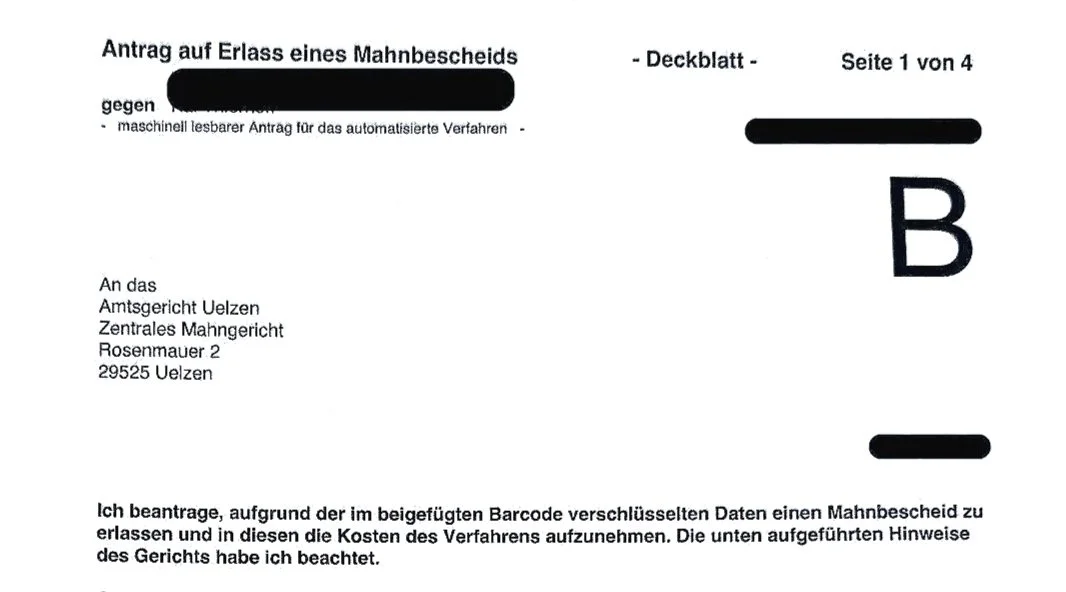
Some obligations should not depend on trust.
Transformation Is Not Independence
The easiest reaction to repeated disappointment would be withdrawal: doing everything myself, depending on nobody and trusting only what I can control. It might feel safer, but it would also make most meaningful forms of change impossible.
Transformation, at least for me, has therefore meant learning something more difficult: remaining open to people while building structures that can survive change. Relationships can matter deeply without being required to last forever. Trust does not have to mean abandoning accountability, and flexibility does not have to become chaos.
Nor should any person, however important, become the single point on which an entire project, organisation or future depends.
This creates new complexity. Resilient structures require more communication, clearer responsibilities, genuine alternatives and sometimes uncomfortable conversations before there is a problem. Especially when building internationally, however, there is no realistic alternative.
We need one another. The challenge is not to eliminate dependence, but to make it healthier.
When Support Becomes Inconvenient
One thing many of these experiences had in common was that support was rarely absent at the beginning.
I often heard how much people believed in what I was doing, how important they considered the work or how much they wanted to help. And in some cases, they did. There was encouragement, practical support and sometimes money. I do not want to erase that simply because something changed later.
But over time, I began to notice that support can mean very different things.
It is relatively easy to support an idea when the role is inspiring, the relationship feels good or the contribution remains voluntary and convenient. The more revealing moments often come later: when a promise needs to be kept, money needs to be repaid, responsibility needs to be carried, work needs to be completed or a difficult conversation can no longer be avoided.
That does not make every withdrawal a betrayal. People change. Circumstances change. Nobody owes another person permanent availability, unconditional loyalty or lifelong participation in their work.
But there is a difference between changing course and leaving others to carry the consequences of commitments we ourselves made.
Support is therefore not measured only by what we are willing to give when we feel inspired. It is also revealed by what we are prepared to carry when responsibility becomes inconvenient.
What Happens After Something Goes Wrong
There is another distinction that matters to me.
I am part of this equation too. I have disappointed people, changed plans, misjudged what I could carry and almost certainly failed at times to understand what someone else needed from me.
The standard cannot be that people never fail. Projects fail. People become overwhelmed. Circumstances change. A developer can discover that a project exceeds their abilities. A partner can encounter financial problems. A friend can realise that they can no longer fulfil a promise. Any of those things can happen without automatically becoming a betrayal of trust.
What matters enormously is what happens next.
Do we communicate honestly once the problem becomes visible? Do we acknowledge the consequences for others? Do we take responsibility for what is ours and try to repair what can still be repaired? Or do we disappear, delay, deny, rewrite what was agreed or leave someone else to absorb the consequences?
Over time, I have become less interested in whether people fail. Everyone does. I have become much more interested in what they do after failure becomes impossible to ignore.
Reliability is not the absence of failure. It is also revealed by what happens afterwards.
Building With What I Know Now
Today, these experiences shape the way I approach almost everything I build across countries, organisations and cultures. I still rely on people — probably more than ever. Students, local partners, universities, developers, friends and people I may not even know yet can each change the direction of an idea or make something possible that I could never create alone.
The difference is that I no longer want trust to carry what structure should carry, or structure to replace what only genuine human connection can create.
Both matter.
The most interesting possibilities may begin when the right people recognise something in one another before either side knows exactly what may come from it. Perhaps the question is therefore no longer only who really stays. It may also be who arrives next — and what becomes possible when they do.
What the Trash Taught Me
Years ago in Kolkata, I thought I had a rubbish problem.
In reality, I was beginning to learn something about systems.
Knowing what should happen does not make it possible. Wanting people to behave responsibly does not create the conditions they need to do so. And trusting that something will work does not make a structure resilient.
Whether we are talking about waste, ecosystems, friendships, organisations or international partnerships, good intentions matter. But they need somewhere to go. Awareness needs realistic alternatives. Trust needs accountability. Collaboration needs structures capable of surviving change.
Perhaps that is what transformation has increasingly come to mean for me: not becoming independent of people or protecting myself from every possible disappointment, but remaining open enough to connect, clear enough to recognise what is happening and resilient enough to continue when circumstances, relationships and plans inevitably change.
The rubbish was eventually gone.
The lesson stayed.
Have these reflections connected with experiences of your own — in life, work or collaboration? If you would like to share a perspective, continue the conversation or explore what these questions might mean in practice, we would be glad to hear from you.
From Curiosity to Connection to Change · If this note sparked a thought or a new perspective, we’d be delighted to continue the conversation. Every exchange, collaboration and contribution helps build meaningful connections across cultures.