

flmp · The Human Layer
Why orientation matters before methods, movement or scale
Most frameworks start with tools. Some start with goals.
Few start where real change actually begins: with the human layer.
The human layer is not about motivation or productivity.
It is about perception, responsibility and orientation in situations where complexity is real — and decisions matter.
Before strategies are formed, before projects move, before organisations act, people are already navigating uncertainty internally. Often without structure. Often without language for what is happening. This is where friction, hesitation or false clarity usually emerge.
flmp starts here.
Not because everything must be solved internally first, but because unseen structures inevitably shape external outcomes.
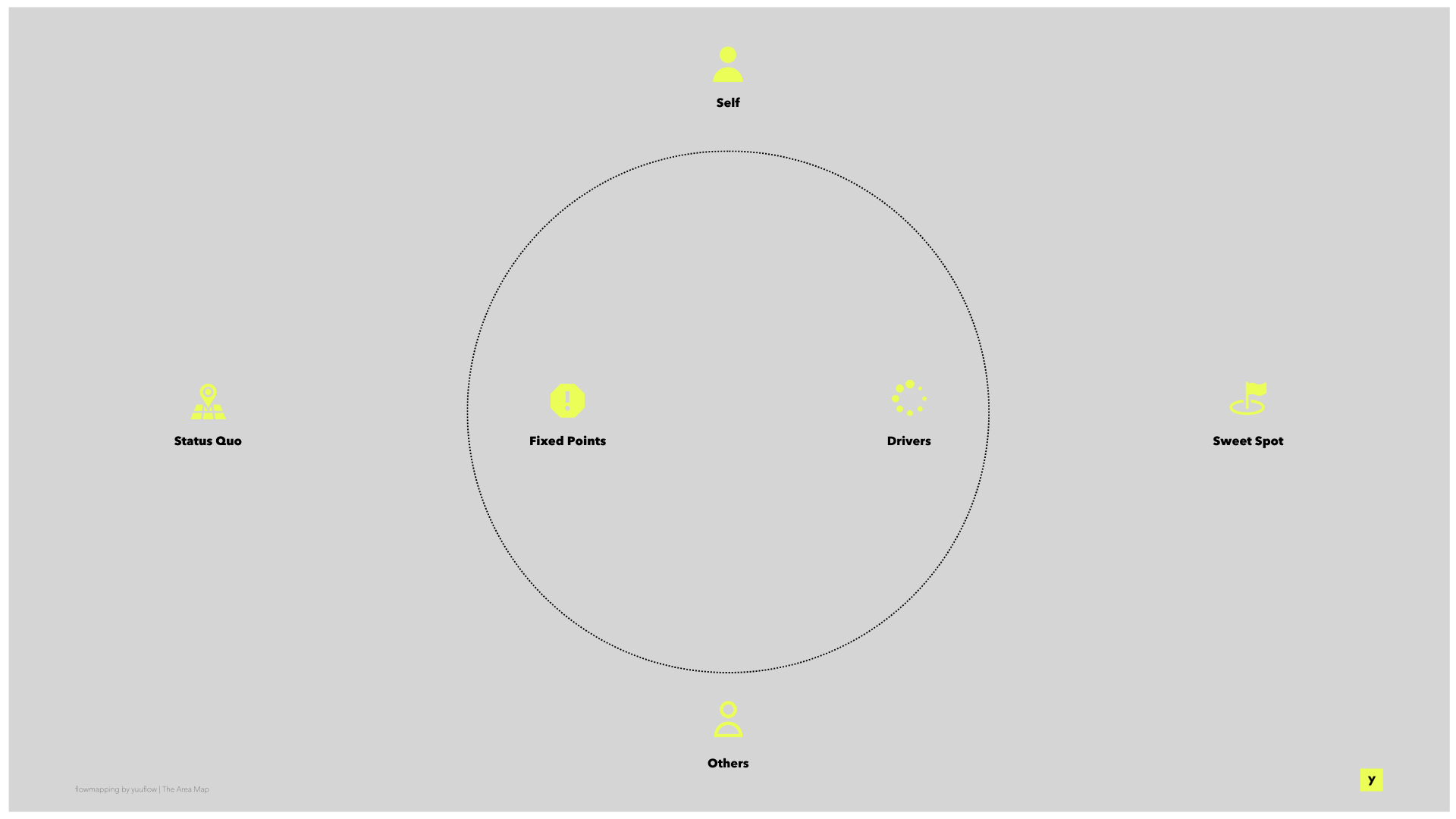
The Area Map – a shared orientation model across contexts.
From experience to orientation
At its core, flmp operates as an applied orientation framework.
Elements such as the Area Map, Category Boards and Screening formats translate subjective experience into analysable structure. They support the differentiation of domains, the identification of relevant variables, and the clarification of decision contexts without collapsing complexity into premature solutions. Rather than prescribing outcomes, these tools enable structured sense-making — creating clarity at the level where thinking, responsibility and action begin.
This is not abstraction for its own sake.
It is a way to make complexity workable without reducing it.
Drivers
Drivers are one of six categories within the Area Map. Each category captures a different structural aspect of a situation
Only together do they form a coherent orientation model.
Why the human layer comes first
In cross-cultural contexts, organisational settings or periods of transition, people often face the same underlying questions:
• What actually belongs to this situation — and what does not?
• Where am I influencing, reacting, or avoiding responsibility?
• Which decisions are premature, and which are overdue?
Without orientation, action becomes noise.
With orientation, even small steps gain coherence.
The human layer does not replace expertise, processes or institutions.
It prepares the ground on which they can work properly.
From reflection to applied contexts
flmp is used across different settings: personal orientation, education, organisational work and field-based collaboration. Some applications are reflective, others applied, others collaborative. Together, they form an ecosystem in which learning, engagement and decision-making inform each other — without fixed paths or predefined outcomes.
At the moment, this work is being implemented across academic, organisational and field-based contexts. Further steps will follow during the upcoming India visit, where on-ground collaboration and contextual alignment continue.
Access, not transactions
Access to flmp is not booked.
It begins with context.
The framework is approached through dialogue, positioning and clarity about the situation at hand — not through generic entry points or one-size-fits-all formats.
Further context on flmp and how it is accessed →
yuuflow.com/access
If the document does not display correctly on your device, you can open the full version here.